
Pattern Making | Draping
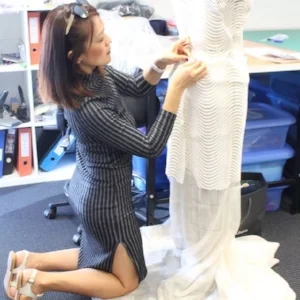
Learn to make simple or complex garments using the European method of draping. By working directly with fabric on a dress form taped at key design points, students create patterns with the precision of flat pattern making while gaining a deeper understanding of fit, proportion, and fabric behaviour.

What You’ll Learn
This course develops advanced pattern-making skills through the European method of draping, deepening students’ understanding of fit, proportion, and three-dimensional garment construction. Students learn how to translate draped forms into accurate patterns that can be refined, reproduced, and developed further.
The course builds on existing flat pattern-making knowledge. Students may revisit and refine basic blocks in class to support the transition from flat pattern to draped design. Depending on experience, instruction may also include draping techniques for jackets and more structured garments.
You will need to complete Introductory Pattern Making first or have similar sewing & pattern making experience.
What to Expect
Our courses are open to all skill levels and held in our Pymble studio on Sydney’s North Shore. We offer morning, afternoon, full-day, and evening options, running Monday through Saturday.
Classes run once weekly for 3–3.5 hours across an 11-week term. Courses are typically priced in the $900–$1,000 range, depending on the number of hours.
As this is an advanced class, many students will require more than one term to complete their project.
Class Times & Booking
You’ll be able to view upcoming class dates and pricing before confirming your booking.
Not quite ready to book?
Join our community for free video tutorials, couture sewing tips, course guide and early booking access.
Draped Pattern Making | Course Summary
This course offers a structured, hands-on approach to draped pattern making, guiding students through each stage of the process—from preparing the dress form and fabric through to refining and validating finished patterns. Emphasis is placed on accuracy, repeatability, and translating three-dimensional drapes into workable patterns suitable for further development and garment construction.
Students work through the following techniques and processes:
Taping the dress form
Completing soft arms for fitting garments with sleeves
Padding a dress form to individual measurements where required
Design preparation, seam planning, and pattern construction planning
Preparing the dress form for draping
Fabric preparation for draping
Draping techniques, marking drapes, enlarging forms, and adding seam allowances
Verifying and completing draped patterns
Sampling garments using couture and luxury ready-to-wear construction techniques
Draped patterns may include basic blocks, skirts, tops, dresses, strapless garments, casual coats, and jackets